Temp Reading From Manifold on 06 5.9 Cummins to Check Injectors
We go a lot of calls on a daily basis with customers trying to diagnose some type of issue with their truck. Fortunately, nosotros're typically able to assistance diagnose and requite recommendations for products or procedures to remedy the effect. We must accept adult quite a proper name for ourselves over the years, as oftentimes nosotros even get calls from shops that are scratching their heads, hoping we accept the golden ticket, and fortunately, nosotros usually do! One of the most common calls we become are from customers with a 2003-2007 Cummins that have developed either a hard outset or no starting time condition. In society to help out, we had our very own Tyler Lucas, put together this pace by step tutorial that you will hopefully notice insightful. Tyler has been elbow deep in diesel engines for years, especially Cummins, so he is a wealth of information when trying to cure a plagued engine.
The very offset thing that needs to be checked is battery voltage. When I say battery voltage, I am non talking about simply getting a voltmeter and putting it on the positive and negative posts, every bit y'all will only get what's called a surface charge, which won't tell yous what's really going on when the battery is under load (i.eastward. cranking). It is very mutual to take a battery read around twelve volts on a surface charge, but so drop well beneath nine (the minimum voltage to allow for cranking on 2003 to current Cummins) when under load. Overall, make sure that when you test the bombardment, you are doing so nether load by cranking the engine and watching the voltmeter.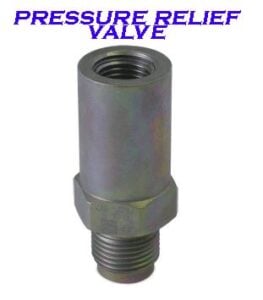
Let'southward now say your batteries are skilful. You and so enquire yourself, "Tyler, what now?" Don't worry sad no kickoff truck, nosotros've got your dorsum! Permit's at present swoop into the fuel arrangement. Outset off, allow's get this out of the way, Ram trucks NEVER had the best luck with lift pumps. A lack of lift pump flow will not simply cause a no commencement result, just depending on how information technology failed, can crusade other problems that we volition talk over further into this postal service. The manufacturing plant lift pumps on the 2003-2007 Cummins produce a dismal 10-11.v PSI at idle. Merely unfortunately, due to these pumps' inability to actually produce volume, the pressure drops off considerably as load increases. And call up, while pressure level is definitely an important factor as this is the rate at which fuel is dispensed, volume is equally, if not more than of import, as it'south the corporeality of fuel. This drop in pressure is even greater when fueling modifications and upgrades are added, such every bit programmers, upgraded larger displacement injectors, and college book injection pumps, because guess what, they are all enervating additional fueling for increased performance. When y'all kickoff going below 5 PSI, yous are not supplying the injection pump with enough fuel to properly drive the injectors, and at the very least, you will experience a loss of power and fuel economy. Some customers will discover the truck "falling on its face" or flat lining with power as the pump simply cannot supply any more fuel. After time, the pump will only cease working due to being over stressed and constantly running at maximum output. And this is exactly what nosotros will be testing for next, the health of the lift pump. The all-time way to check your fuel pressure level is to install an inline pressure level gauge before the injection pump. But nosotros empathize that in many instances when your truck won't start, y'all just don't take the fourth dimension or resources to collect the parts and tools to attain this. Then we accept an culling method for you by checking the full general book output of the pump. In order to practise this, remove the fuel supply line before it connects to the injection pump and identify the open end into a saucepan under the truck. Adjacent, hop in your truck, and "crash-land" the key. When I say bump the key, merely plough the cardinal to creepo the engine for a second in lodge to engage the pump. At this point, you should hear the pump run the duration of its cycle. For reference, the 2003-2004.five trucks came equipped with a cake mounted lift pump and the 2005-2007 trucks came from the manufacturing plant with an in-tank lift pump, yet many of the 2003-2004.5 trucks were afterward retrofitted with this same in-tank design. This will give you a guess on where to listen for the "hum" of the electric motor on the pump. Once you've bumped the primal, presuming the pump is operating normally, yous should see fuel dumping into the bucket. However, if no fuel comes out, and so it's condom to assume that this is the culprit of your no starting time issue. In social club to correct, you'll need to supersede the lift pump, and no ameliorate time to upgrade than now. Our preferred brands of aftermarket lift pumps are FASS and AirDog, simply because they have options for stock to fully modified engines, offering filtration that is far superior to stock for increased protection, and come up standard with a lifetime warranty. Out of those manufacturers, our most pop models are without a doubt the FASS Titanium and AirDog 2-4G. For most trucks, even slightly modified, a book of 95 or 100GPH is aplenty to properly supply the injection pump for a lifetime of trouble gratuitous service. And merely remember, bigger isn't always better in terms of lift pump option.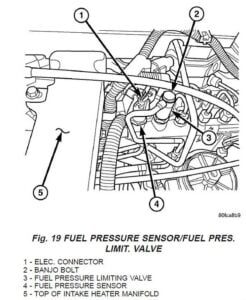
Just Tyler, I checked that and everyone knows that Dodge elevator pumps are sub-par at all-time. Stay with me hither, we are graduating to the high pressure side of the fuel system now. I of the most common issues I see on common track Cummins, is the pressure level relief valve, or PRV for short. For those unsure of exactly what I am talking about, this is the large fitting on top of the fuel rail that has a fuel line attached to the superlative of information technology via a banjo bolt that so returns fuel dorsum to the factory fuel filter. The force per unit area relief valve is designed to do just as the proper name implies, relieve pressure. Specifically, it begins to open at 26,000-27,000 PSI and return whatever excess fuel to exist recycled back into the system. Normally, these valves will get stuck in the open position and stay that way when the truck is turned off. If the valve is stuck in the open up position, the truck is unable to build the necessary fuel runway pressure (5,000-7,000 PSI) for startup. Remember, this is a mutual rails system and that pressure level is absolutely necessary for the fuel to exist atomized properly to create combustion. To visualize this, imagine trying to blow up a balloon with a gaping hole in the side of information technology, not happening, right? In almost cases, nosotros sell either a new replacement pressure level relief valve to return the organisation to stock, or a PRV Block Off to eliminate the relief valve all together.; Some would argue that installing a block off is unwise when combined with a manufactory fuel system because it cannot protect itself confronting pressure level spikes. Now, I have been around these engines quite a flake, and accept installed countless block offs in completely stock trucks without a single issue. This fuel system is designed to handle exceptionally high pressure, then a small spike in pressure for .00001 of a second should non cause any harm. The do good of installing a block off as opposed to a new PRV? Well, that'due south unproblematic; number one you'll never have to worry about a blown PRV again, and secondly, a block off is substantially less money. With that said, I don't recommend running a stock fuel organization with a rail pressure box, such equally the TS-MP8 on its max setting, combined with a cake off, as it volition over stress the fuel system. Which one is right for you? That's up to yous and your truck, but every bit e'er, if you need guidance, feel complimentary to contact us and we will help steer yous in the right management.
Before we go to some other portion of the fuel system, another quick bank check is the transfer or connector tubes. This is the part that transfers fuel from the high pressure mutual rail to the injectors. The fuel line from the rails connects to the inlet and is seated against the injector via a jam nut. At that place was really a TSB (Technical Service Message) from Dodge years agone regarding the tubes losing torque, causing them to leak between the injector and the tube. This can hands be checked by removing each private fuel line and checking the jam nut to ensure information technology has the proper torque. I torque tubes to effectually 55 ft. lbs., mill spec is 35 ft. lbs.
Now y'all may say, "guess what Tyler, I've already checked that, what's next on the docket?" Well fellow Cummins connoisseur, I have your back even so again. This next examination gets a fiddling more involved. Each of the six injectors in your engine volition return fuel. The maximum amount of leakage on a warm engine is 160 mL per infinitesimal at about 1200 RPM'due south. During cranking, you desire to run across 90mL, or about the amount of fuel that would fit in a double shot drinking glass, essentially not a lot of fuel. In order to perform this examination, you will need that trusty bucket yet over again to capture the render fuel, as well as a pocket-sized department of hose that volition be used to extend the return line somewhere where you can sentry and hold the bucket. If y'all wait in the driver'south side front fender well, in that location are 2 hard plastic fuel lines with a clip attaching them virtually halfway up the engine. One is a return from the CP3 injection pump coming out of the fuel filter canister, and the other is for the injectors coming from the back of the head. Make sure you are only dealing with the line coming from the back of the head. You will take that line and detach it by releasing the prune. Now that the render line is free, attach your hose to extend into your trusty saucepan. Finally, accept a helper hop in the truck and start cranking. Unfortunately, this particular test requires you lot to creepo the engine for an entire minute, which volition seem like an eternity to yous, your starter, and your batteries. Being the spec is only 90mL, if you have gone past that in the showtime 15 seconds, just finish, every bit we know there is a trouble at that point. Usually a practiced working gear up of injectors that are returning the proper amount of fuel volition simply lightly trickle out of the return line. Whatever result over 90mL ways the injectors are returning excessive fuel, and they either need to be repaired or replaced. This is also a swell examination if yous take lost fuel economy, simply the truck seems to be running properly. A slight driblet in injection force per unit area acquired by excessive return volition cause improper atomization, therefore decreasing efficiency. That's another topic I'one thousand sure I could elaborate on for a few pages about, but that's for some other day!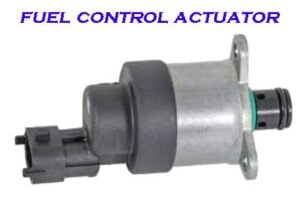
If you accept checked everything and we however accept a no start condition, I would look at the CP3 injection pump. The but way to actually test the output of the CP3 is to send it to a fuel shop and become it on a test stand up. There is one test you can exercise at home, but it is definitely a backyard mechanic test, and not a true determinant for the health of the pump. We will exist looking at the Fuel Command Actuator, also known every bit the FCA, M PROM, and I have even had people call it a pressure regulator. This is the 2 wire actuator coming off the dorsum of the CP3, and is the only electronic connection on the pump. This sensor basically tells the CP3 what pressure information technology needs to be at. In some instances, this actuator volition either get stuck in a certain position or stop operating altogether. When this sensor is unplugged, the pump loses its ability to restrict menses, thus will run at maximum pressure, which is exactly how we will run this exam! We are going to unplug the FCA and attempt to beginning the truck. Continue in mind you Cummins techs out there that say this is not a valid test, as this exam is not for yous. This test is for the hard working Boilerplate Joe that doesn't want to take his truck to you lot and pay your $120 per hour labor charge per unit. Alright, now back to the test, if the sensor is unplugged and the truck starts, nosotros can assume the sensor is non functioning properly, which again, is a very commonly failed component. Now very of import, if the truck starts, make sure y'all apace turn it off, equally with the FCA unplugged, there is no metering of the CP3, which means it will run at maximum chapters, causing elevated RPM's and a rough idle.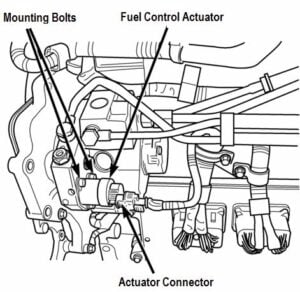
All of the above tests are intended for the do-it-yourselfer, and will typically atomic number 82 to the underlying crusade of the consequence in nigh instances we have encountered. However, if after performing these tests the diagnosis is all the same uncertain, the trouble is probably more in-depth. As always, if you have whatever questions about the above data or any of the products mentioned, do not hesitate to give united states a call or send an email to [email protected] and nosotros would be happy to assist.
Tyler Lucas
Assistant Sales Manager
[email protected]
(888) 99-DIESEL Ext. 103
Source: https://www.dieselpowerproducts.com/blog/2003-2007-cummins-no-start-no-problem/

Post a Comment for "Temp Reading From Manifold on 06 5.9 Cummins to Check Injectors"